PET vs. Steel Strap for Coil Packing Lines
PET or steel strap is not a price decision. This guide compares both across the full station boundary — feeding, guarding, edge protection, replenishment, and transport route — inside an automatic coil packing line.
PET vs. Steel Strap for Automatic Coil Packing Lines
PET vs. Steel Strap for Automatic Coil Packing Lines
Strapping is often treated as a small detail in a coil packing line project. In practice, the strap decision changes tooling, replenishment, package behavior, operator work, and the way the finished coil survives storage and transport. Choosing between PET and steel strap is not about declaring one material universally better. It is about matching the strap system to the product, the package objective, and the downstream route.
This guide helps engineering, packaging, and procurement teams make that decision inside an automatic coil packing line scope.
Start with the Package Job
Ask what the strap must do after the coil leaves the station. In some projects, the strap mainly keeps wrapping layers and protective parts in place. In others, it also helps hold a stacked bundle, protects the package during repeated handling, or remains on the coil through a long export route.
The strap decision should be tied to:
- Coil size, weight, and edge condition
- Whether the coil is packed individually or as a bundle or stack
- Surface sensitivity and risk of marking
- Storage duration and shipment route
- Required package stability during forklift, crane, or conveyor handling
When that job is unclear, teams end up comparing material prices without understanding the real package risk.
Where PET Strap Fits
PET strap is often considered when the project needs a non-metallic holding method with controlled tension and simpler handling at the station. It can be practical for coils or bundles that do not require the specific properties of steel strap and where the packaging objective is to secure the final pack without introducing sharp metallic edges into the workflow.
In an automatic line, PET can support:
- More controlled strap dispensing and replenishment
- Lower risk of operator contact with sharp strap edges during routine handling
- A package concept where the strap works together with wrapping and edge protection rather than acting as the only structural restraint
That does not mean PET should be chosen by default. The real question is whether the finished package keeps its required shape and holding behavior under actual storage and transport conditions.

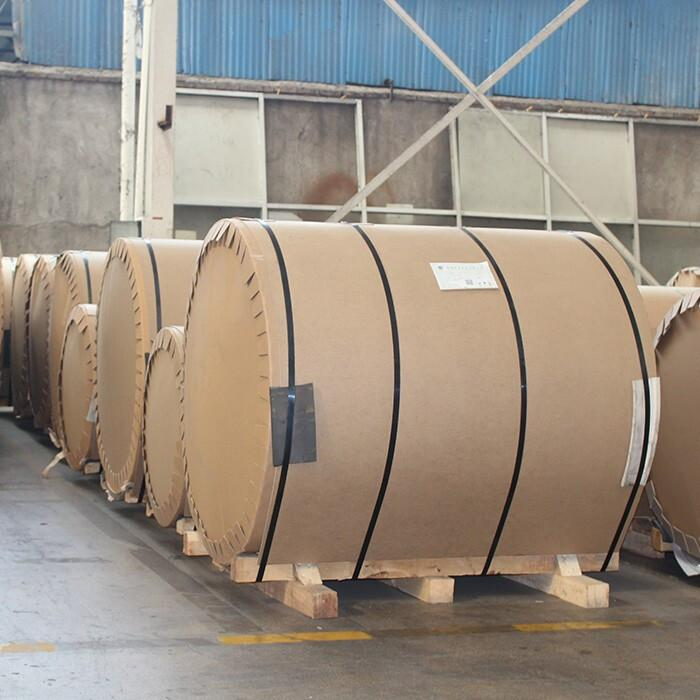
The image shows an aluminum coil strapping machine using PET strap. PET is one option inside the strapping station; the decision still depends on the finished package, not on the material roll alone.
Where Steel Strap Fits
Steel strap is often selected when the package needs a more rigid restraint, when downstream handling is severe, or when the buyer's packaging specification already requires it. In some operations, steel strap remains the standard because the product family, internal handling culture, or transport route has been built around it.
In an automatic line, steel strap affects more than the strapping head. It can change guide design, edge protection requirements, guarding, scrap handling, and the care needed during manual intervention. A package that uses steel strap should also define how strap contact points are controlled so the package does not create new surface or edge damage.

The image shows a steel coil strapping machine. Steel strap changes the station around the head: guides, edge protection, guarding, scrap handling, and intervention routines all need to be defined with the package in mind.
Compare the Whole Station, Not Only the Strap Roll
An automatic coil packing line does not consume strap in isolation. Compare PET and steel across the full operating boundary:
| Operating Factor | PET Strap | Steel Strap |
|---|---|---|
| Package job | Secure the final pack together with wrapping and edge protection | Rigid restraint for severe handling or a defined packaging rule |
| Station behavior | Compare feeding, changeover, tension, joint, and replenishment on the line | Compare guide design, guarding, scrap handling, and intervention |
| Surface and edge risk | Verify contact points on sensitive coil surfaces | Define edge protection and controlled strap placement |
| Downstream route | Confirm for internal storage and longer export routes | Confirm against the actual handling and transport plan |
This comparison usually reveals that the cheaper material on paper may create a more difficult station in daily operation.
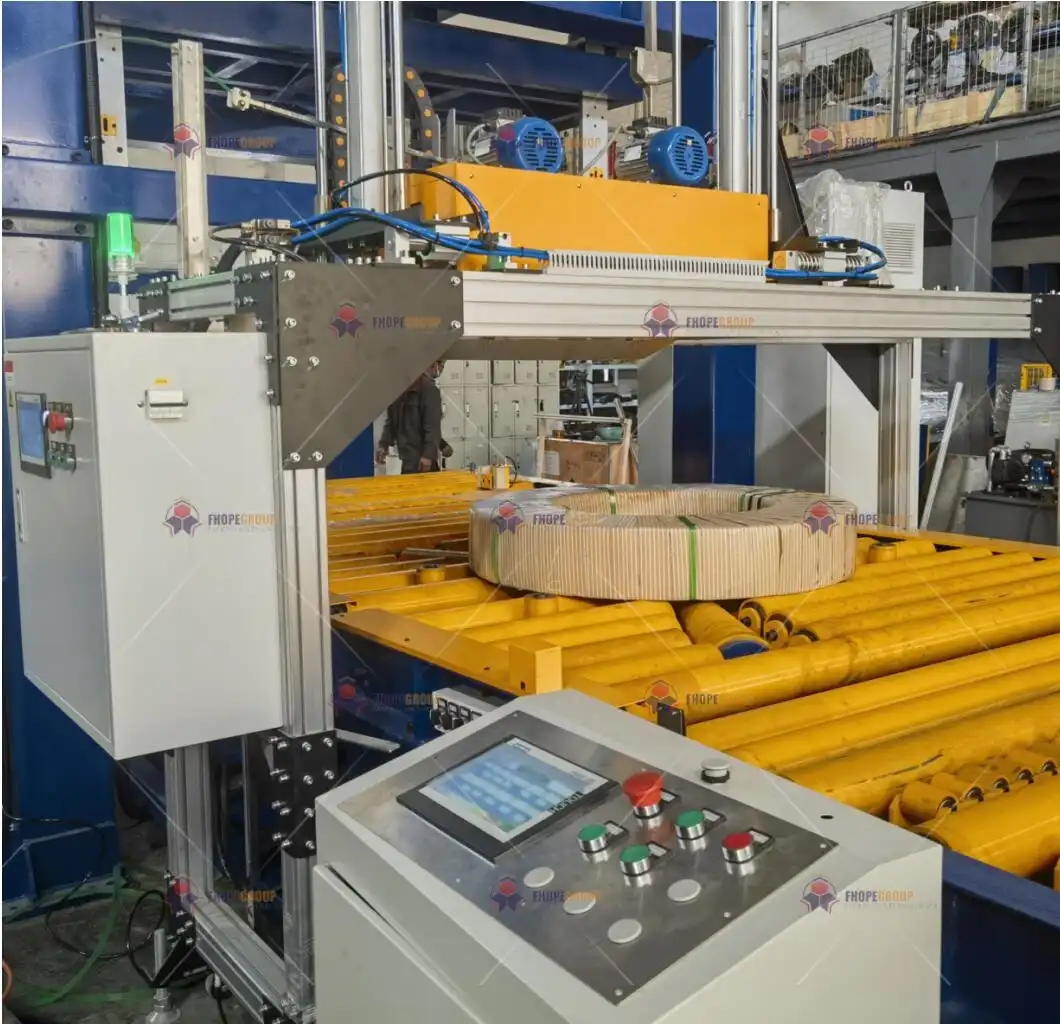
The image shows a steel coil strapping machine using PET strap. The station comparison covers feeding, tension control, joint quality, and replenishment, not only which material costs less.
Protect the Product Surface and Edges
The strap choice must be tested with the actual package build-up. If the coil includes paper, film, VCI material, side protectors, or bore protection, the strap should be evaluated together with those layers. Surface-sensitive coils may need controlled contact materials or strap placement so the final package remains stable without imprinting, cutting, or shifting the protective layers.
Do not evaluate the strap on bare steel if the shipped product is never packed that way.
Check the Downstream Route
Warehouse storage, export shipment, outside storage, and repeated lifting can all change the right answer. A strap that performs well in a short internal route may not be the best choice for longer storage or rougher handling. The package should be reviewed as a transport system, not only as a machine output.
If the buyer already has a written packaging rule for certain customers or routes, that rule should be the starting point for the comparison.
Watch an automatic steel coil packaging line with stacking system:

Define Manual Intervention and Replenishment
Both strap types require normal intervention: coil change, material replenishment, joint inspection, and recovery after a misfeed or rejected package. The line design should state the safe state for those tasks, the approved material, the first-article check after replacement, and the evidence required before returning the package to normal flow.
This is where a theoretical material decision becomes an operating decision.

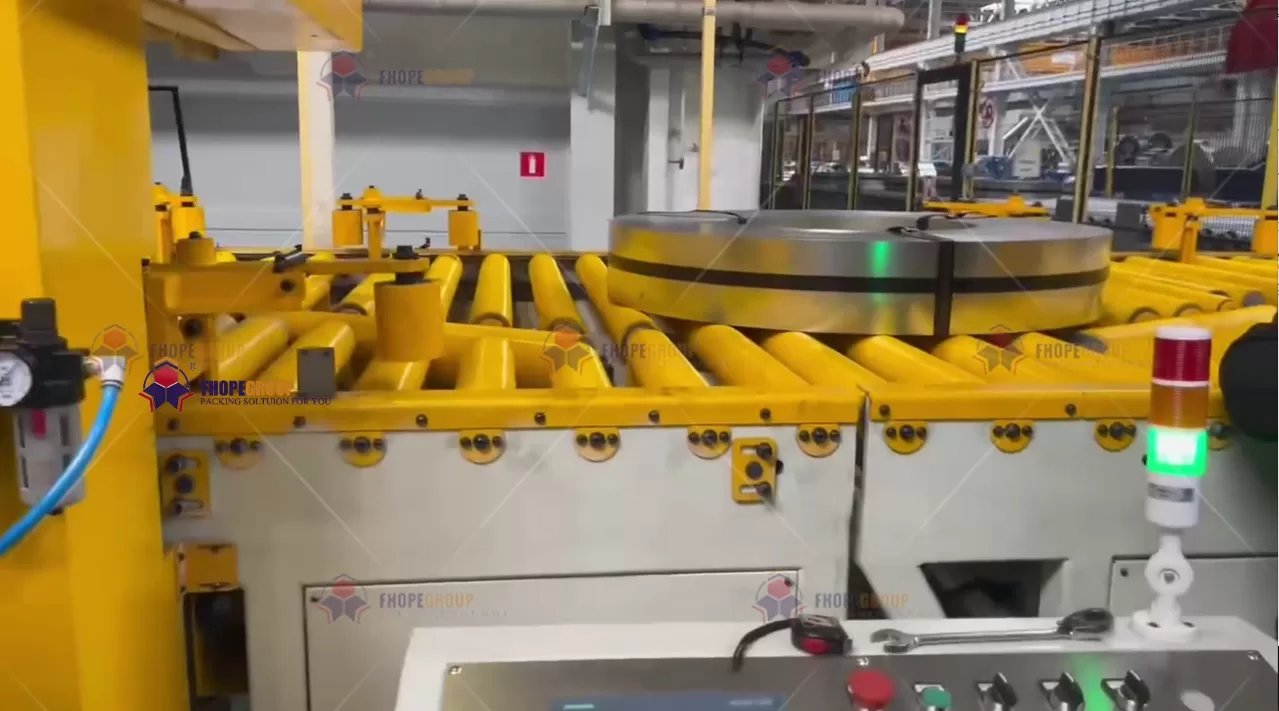
The image shows a coil strapping machine station. Manual intervention and replenishment should be designed into the same station, with a defined safe state, first-article check, and evidence before the package returns to normal flow.
Validate with Representative Packages
Before freezing the specification, test the chosen strap on representative coils and package builds. Include the normal family and the difficult cases: heavier coils, more sensitive surfaces, different edge protectors, and the shipment routes that create the highest package risk.
Record the package condition after strapping, after handling, and after a defined storage or shipment simulation where available. The test should prove the package outcome, not only that the strapping unit cycles.
A Practical Next Step
Build a PET-versus-steel comparison sheet around the real product families, final package structure, downstream handling route, and intervention method. Then qualify one strap system against representative packages inside the automatic coil packing line specification.
Visual Details
Click to enlarge

Click to enlarge
Click to enlarge
Click to enlarge
Watch How It Works
Discover how our automated packaging solutions optimize your production line efficiency. This video demonstrates the seamless operation designed for maximum protection.
Trusted by Steel Mills & Industry Leaders
Global manufacturers rely on FHOPE heavy duty packaging equipment


Ready to optimize your packaging line?
Get a custom quote with ROI analysis. Our engineers respond within 24 hours.
- Free layout design
- Global installation support
- 2-year warranty included
Your information is secure and will never be shared.
Related Machines
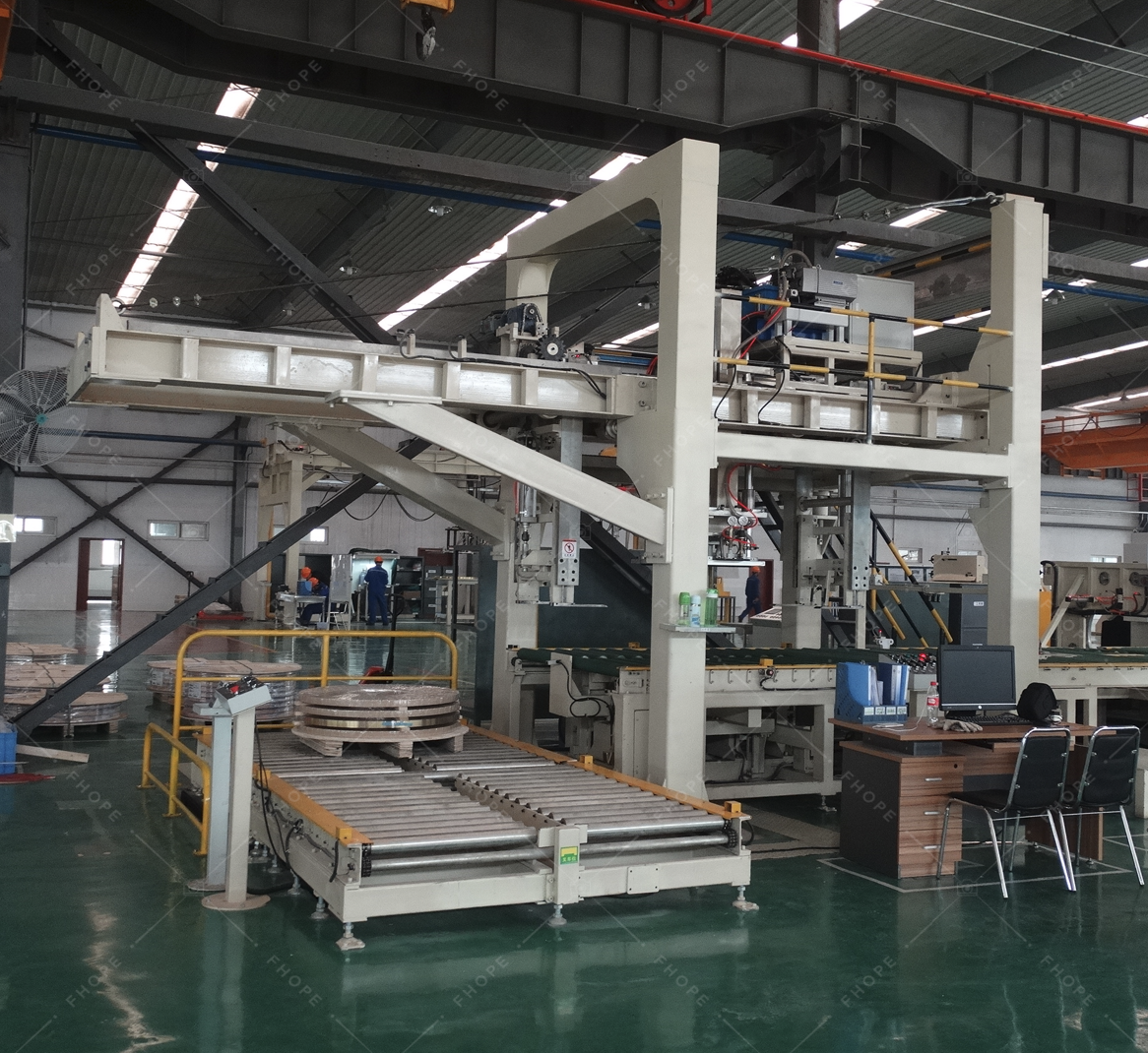
Steel Coil Packaging line
View Details →
Vertical coil packaging line
View Details →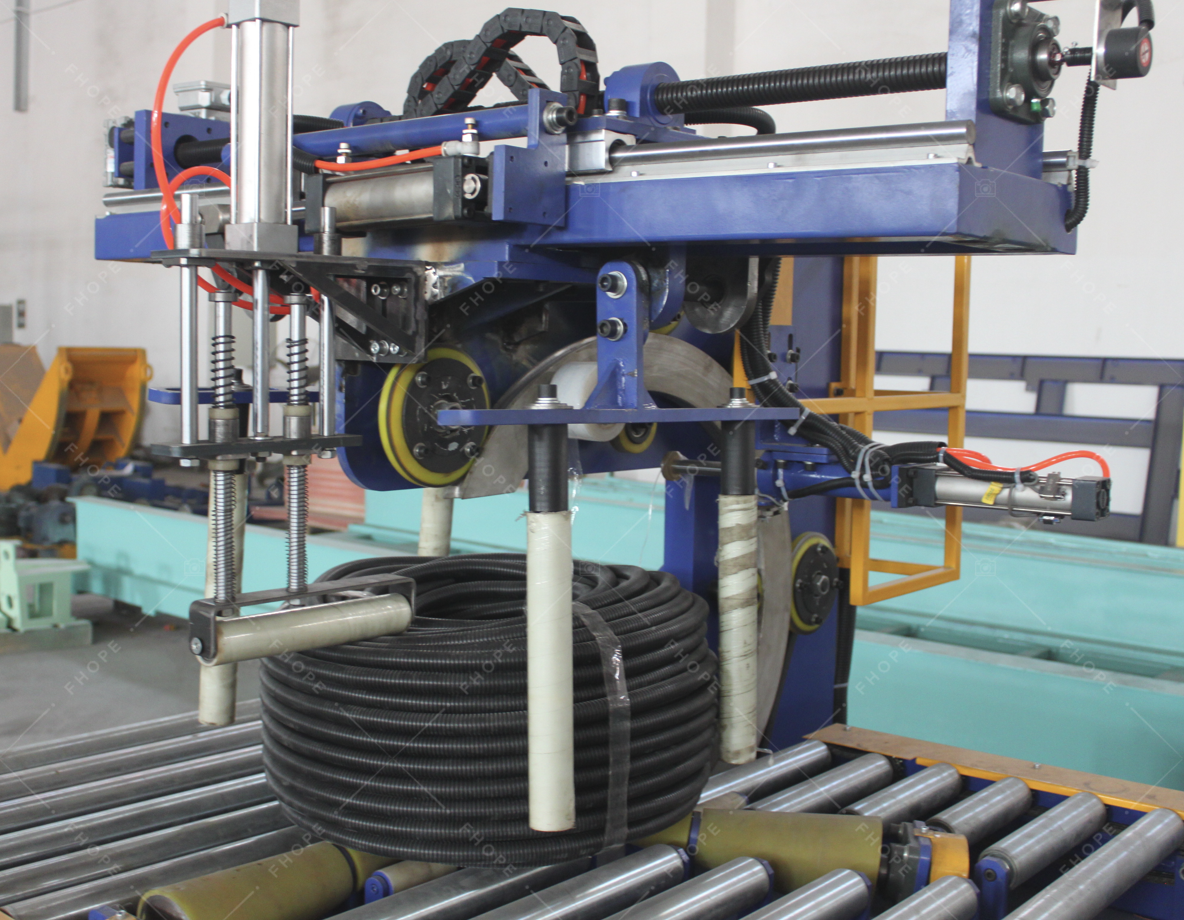
Hose Coil Packaging line
View Details →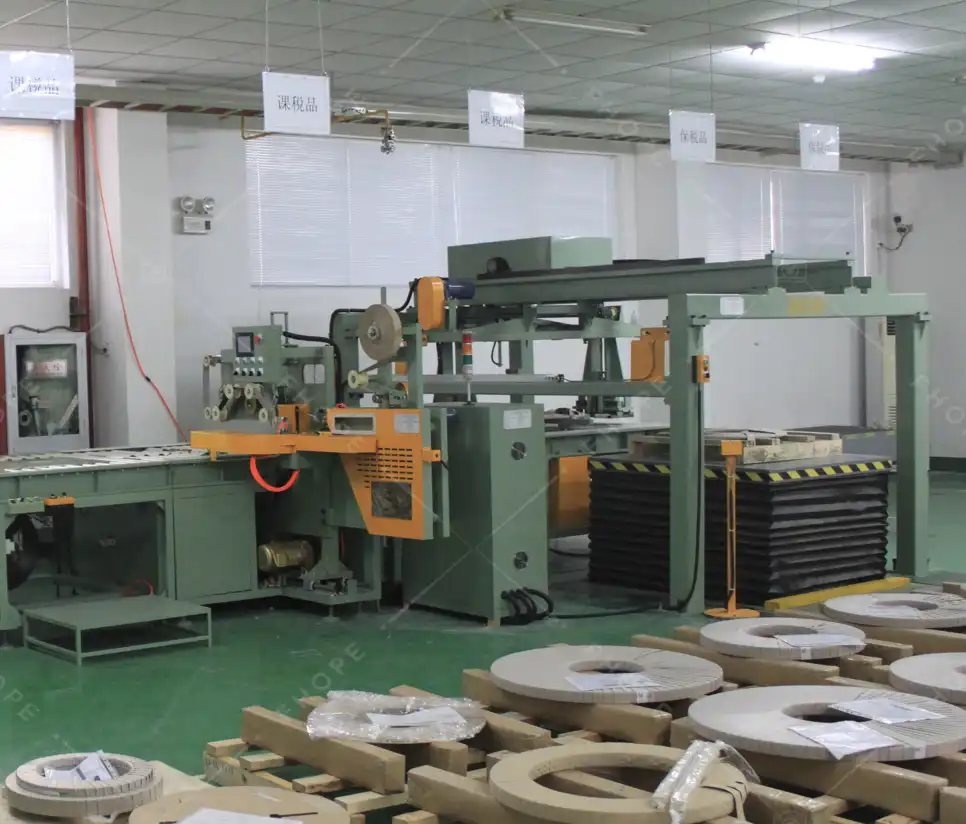
Copper Coil Packaging line
View Details →
Wire Coil Packaging line
View Details →
Panel Packaging line
View Details →
Pipe Bagging Machine
View Details →
Aluminum profile packing line
View Details →
FHOPE Automatic pipe tube bundling&strapping line
View Details →
Automatic pipe tube bundling & strapping line
View Details →
Automatic steel tube strapping machine
View Details →
FHOPE Automatic steel tube packing machine
View Details →
Automatic plastic Pipe strapping packing line
View Details →
Automatic PPR/PVC Pipe bagging line
View Details →
Platsic pipe bag packing machine
View Details →
Tyre Packing Machine FPT-200
View Details →
Tyre Packing Machine FPT-300
View Details →
Tyre Packing Machine FPT-400
View Details →
Cable Coil Packing Machine-FPCA100
View Details →